How Well Do You Know Me?
- 4.4
- Rating
- 5.00M
- Installs
- Free
- Price

 Analysis by App-foxy
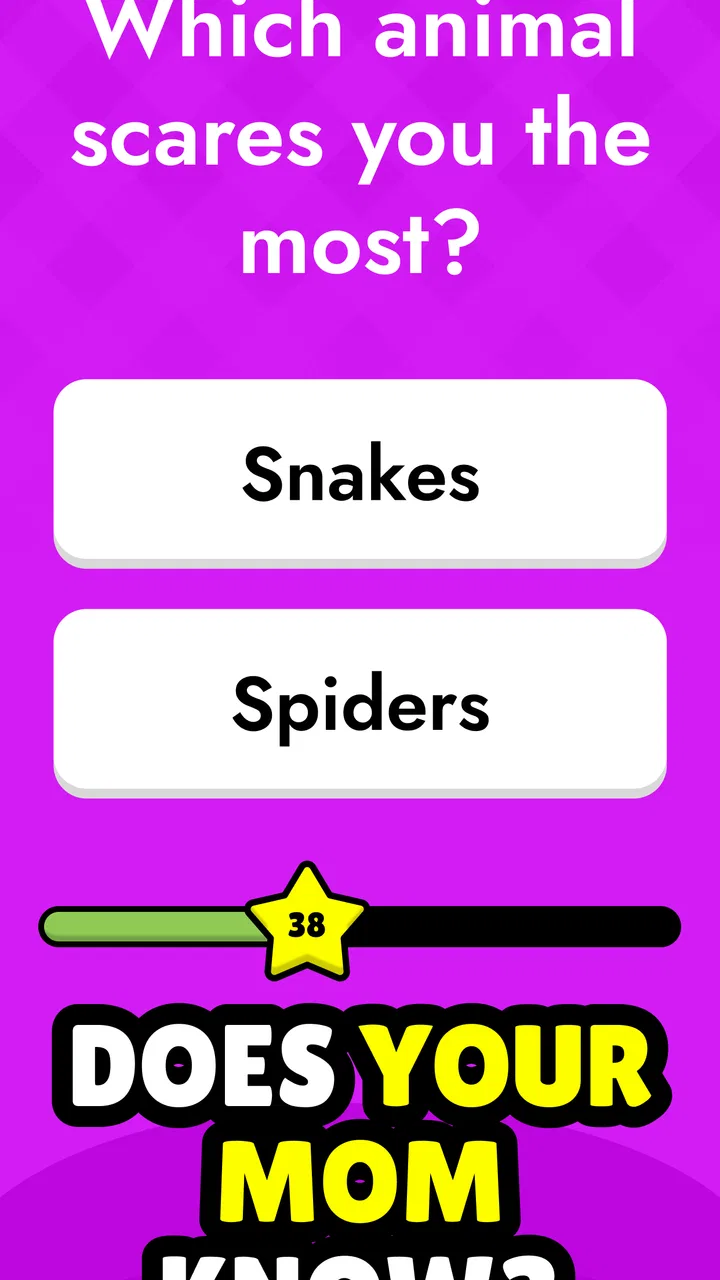
I found How Well Do You Know Me? most enjoyable when I stopped treating it like a traditional quiz and used it as a conversation starter. This is a free trivia game from DH3 Games built around two people testing how accurately they understand each other. The questions are simple enough to begin quickly, but the interesting part comes after an answer: a confident guess can turn into a funny disagreement, while an unexpected match can reveal how much attention two friends or partners really pay to one another.
That focus gives it a different feel from general-knowledge quiz apps. You are not competing against a large online crowd or trying to memorize obscure facts. Instead, the game works best when two people already have some shared history. I can imagine using it during a quiet evening with a partner, at a sleepover, or while waiting with a friend somewhere that would normally become a scrolling session. It is also a useful choice for people who want a lightweight social game rather than a demanding challenge.
How the two-player format feels in real use
The central idea is easy to understand: two people answer questions about one another and compare how well their answers line up. That simplicity is a genuine advantage. I did not need a long tutorial or a complicated set of rules before getting started, and the game’s purpose is clear almost immediately. The best sessions are less about winning and more about the reactions between questions.
You May Also Like

 Blood Strike: 2.5 Anniversary
Blood Strike’s Loadouts Turn Every Drop Into a Tactical Gamble
A close look at Blood Strike’s custom loadouts: how fast access to signature weapons reshapes its battle royale rhythm, rewards preparation, and narrows the gap between fights.

 Pandora - Music & Podcasts
Pandora’s Music Is Easy to Start, but Harder to Recover
Pandora’s strength is its low-effort path from a seed to a station. Its weak spot is how much confidence it asks you to place in connection, setup, and quiet recovery.

 8 Ball Pool
 Is Built on Rivalries, Rematches, and Routine
A close look at the rivalries, rematches, shared routines, and unanswered safety questions that turn a quick pool match into a persistent mobile community.

 Samsung Music
’s Quiet Strength Is Playing What You Already Own
Its reach comes less from spectacle than from dependable access to a personal library. That simplicity is both the app’s strongest retention engine and its ceiling.

 AccuWeather: Weather Radar
AccuWeather Review: A Quick, Clear Forecast for Everyday Decisions
For everyday plans, the best forecast is the one you can understand quickly. AccuWeather makes rain timing, radar, and local conditions easy to act on, with a few trade-offs.

 Hill Climb Racing
Why Hill Climb Racing Still Turns Crashes Into One More Run
A tiny car, a bumpy hill and one more upgrade: Hill Climb Racing keeps resurfacing because its simple chaos makes every near-miss feel personal.
More From Our News Desk



That does not mean every pairing will get the same value from it. With a close friend, the guesses can feel surprisingly revealing because both players bring personal memories into the answers. With a newer acquaintance, some questions may feel less meaningful simply because there is not enough shared background yet. I would therefore choose this before a conventional quiz for a relationship-focused moment, but I would choose a general trivia game for a group that wants factual competition.
The game is rated for Teen players, which fits the social and conversational nature of the experience. I would still consider the people involved before handing it to a younger group, especially because personal questions can produce teasing or awkward moments depending on the audience. The format is friendly, but the comfort level comes from the players, not just from the app.
One practical tip is to agree on the mood before starting. If both players want laughs, playful disagreement becomes part of the entertainment. If one person expects a serious test of compatibility, a wrong answer can feel more personal than intended. I found that treating each result as a prompt for discussion keeps the game relaxed and prevents the score from taking over the evening.
Why it can be faster to start than usual trivia alternatives
From a speed perspective, this is the kind of game I can open when I have only a short break. It does not ask me to learn a large rule set before the first interaction, and its two-person focus avoids the preparation that often comes with organizing a larger multiplayer quiz. That makes it a good fit for spontaneous use: one person can suggest a round, the other can join, and the conversation begins almost immediately.
The light structure also helps when attention is divided. If I am playing while chatting, I do not have to maintain a complicated strategy or remember a long chain of objectives. The questions remain the main event. That said, this same simplicity means the experience may feel too modest for someone looking for rapid-fire rounds, leaderboards, deep progression, or a large competitive system. It is quick to enter, but it is not designed as a full-scale quiz platform.
For a realistic everyday scenario, imagine two friends sharing a table before a film starts. A normal trivia app might turn the moment into a contest against facts, while this one gives them a reason to ask whether they remember each other’s preferences and habits. A short session can fill the waiting time without demanding the commitment of a long game. If the answers lead to stories, the app has done its job even after the actual quiz moment has passed.
What happens when a session becomes longer or more intense
Heavy use here is less about demanding graphics and more about how long the conversation remains fresh. The game’s basic concept is easy to revisit, but repeated rounds with the same person can eventually become predictable. Once both players understand the style of questions and have already discussed the obvious answers, the surprise factor may decline. I would use it in bursts rather than expecting it to replace a broad trivia library for daily, extended play.
There is also a social form of “heavy use” that matters more than device load. A group may want to pass the phone around, compare answers, or turn one person’s response into a running joke. That can make the session lively, but it can also make the experience less comfortable for someone who prefers private or carefully considered answers. The best results come from a pair that is willing to answer honestly without turning every mismatch into criticism.
My advice is to use a stopping point. A few rounds can leave people curious and amused, while pushing through every available question in one sitting may make the format feel repetitive. Saving it for different occasions also gives the answers more context. A question that feels ordinary during one session may become much funnier after a shared trip, a new hobby, or a recent disagreement.
Compared with party quiz games, the main trade-off is scale. A large group trivia title usually offers more energy when several people want to participate at once. This game is more focused: its strength is the direct comparison between two people. If your priority is a room full of players shouting answers, I would look elsewhere. If your priority is learning how one specific person thinks about you, the narrower format is exactly what makes it useful.
Stability, recovery, and the practical side of playing
Because the game is built around short question-and-answer interactions, I expect it to feel less demanding than graphically intensive mobile games. I did not approach it as a title that needs a powerful phone, a large amount of storage, or sustained visual performance. Its appeal is in the exchange between players, so the device is mainly a tool for presenting the next prompt and recording the interaction.
That does not make every interruption irrelevant. A phone call, an accidental app switch, or a player handing the device to someone else can break the rhythm of a round. I recommend keeping both players close and deciding who is responsible for holding the phone before starting. That small habit avoids the awkward pause of repeatedly passing the device back and forth or losing track of whose answer is being entered.
Recovery is also easier when players treat the game as a conversation rather than a formal match. If a session is interrupted, there is no need to reconstruct a complex strategy. You can simply continue the exchange or begin another short round. This is one of the quiet strengths of the format: it does not punish casual use as heavily as games that depend on uninterrupted timing or long-term progression.
At the same time, I would not promise a particular experience on every phone. The game supports Android devices running version 6.0 or later, and the current release is 17.0.0. Those details make the compatibility range fairly approachable for many Android users, but an older supported device can still feel different from a newer one. In practical terms, I would keep the operating system updated where possible and close unrelated apps if the phone is already struggling.
Device limits and the cost of keeping the experience simple
One reason this title should be accessible is that it does not rely on the kind of visual spectacle that usually increases hardware pressure. I would not install it specifically for graphics, animation, or a cinematic presentation. The trade-off is clear: lower demands can make a social game easier to pick up, but they also mean that players who judge mobile games by visual polish may find it plain.
The game is free to download, with optional purchases listed between $1.49 and $3.99 per item. I see that as a relatively easy entry point for trying a round without committing money first. Still, I would check the purchase prompts before letting someone else use the phone, particularly in a group setting where different people may tap quickly. The free starting point is helpful, but optional spending can change how comfortable the app feels for families or shared devices.
Its Teen content rating is another reason I would choose the audience deliberately. A game about how well people know each other can invite personal answers, and the same question may be harmless among close friends but uncomfortable in a mixed group. I would avoid assuming that a casual party setting automatically makes every prompt suitable for everyone. The social context matters more here than it would in a neutral facts quiz.
A useful workaround for device and attention limits is to make one person the “host” for the round. The host holds the phone, reads or presents each question, and passes only the answer back into the conversation. This reduces fumbling, keeps the pace steady, and makes the game feel more like a shared activity than two people silently staring at one screen. It is a small change, but it improves the experience when the phone is compact or the players are sitting across a table.
Who will enjoy it, and who should choose something else
I would recommend this game to friends, couples, siblings, and relatives who enjoy comparing memories and preferences. It is especially suitable for people who want a low-pressure way to start a conversation. Someone who dislikes complicated controls may appreciate the straightforward format, while someone who enjoys playful debates can turn incorrect guesses into the most entertaining part of the session.
I would be more cautious about recommending it to a solo player. The defining appeal depends on another person being present, so it is not the right choice if you want a complete single-player quiz experience. It is also a weak match for players seeking serious knowledge testing. A broad trivia app with categories, timed questions, and a large competitive structure will usually offer more variety for that purpose.
The same distinction applies to parties. For two people, the focused format feels intentional. For a crowd, it may require extra organization and patience because the game centers on a pair rather than a whole room. A party title with team rounds would be better when everyone wants to answer simultaneously. I would pick this one when the group is happy to watch, discuss, and take turns instead of competing all at once.
Another trade-off is emotional rather than technical. A wrong answer can be funny, but it can also expose different expectations in a relationship. I would not use the game as a serious measure of trust or compatibility. It can show what each person remembers, assumes, or notices; it cannot replace an honest conversation. That is not a flaw in the app so much as a boundary worth keeping in mind.
How it compares with standard trivia games
Most familiar trivia games test what the player knows about history, science, entertainment, sport, or general facts. Their satisfaction comes from recognition and accuracy. This game shifts the test toward personal knowledge. Instead of asking whether I know an answer from a category, it asks whether I know the person sitting beside me.
That difference changes the meaning of a mistake. In a standard quiz, missing a fact usually ends with a score adjustment. Here, a miss can lead to a story, a correction, or a new question. I found that more memorable than simply seeing a wrong answer marked on a screen. However, it also means the game’s quality depends heavily on the relationship and the willingness of both players to engage.
Its audience reach is substantial, with more than five million installs, an average rating of 4.4, and around thirty-seven thousand ratings. Those figures suggest that the concept has found a broad audience, but they do not remove the personal nature of the experience. A popular social format can still be a poor fit for someone who wants solitary play or factual depth. I would treat its reach as reassurance that the idea is easy to understand, not as a guarantee that every session will be equally entertaining.
DH3 Games has kept the premise recognizable since its release on September 10, 2017. The current version is 17.0.0, which tells me the app has continued through multiple iterations rather than remaining an untouched experiment. Even so, I would judge it by the strength of its two-player interaction, not by expecting the breadth of a long-running quiz ecosystem with extensive modes and competitive tools.
Small habits that make a round better
I get more from the game when both players answer before explaining themselves. If someone gives a long justification first, the other person may unconsciously adjust their response. Keeping the initial answer quick preserves the surprise and makes the comparison more honest. Afterward, the explanation becomes the interesting part.
I also recommend separating playful questions from sensitive subjects. If a prompt produces discomfort, skipping the joke and discussing the boundary is more valuable than forcing an answer. The game works best when both players feel free to be candid. A score is never worth making someone feel examined.
For couples or close friends, repeating a round after a meaningful life change can be more revealing than playing every day. A new job, move, hobby, or travel experience can change what each person expects the other to know. Used occasionally, the app becomes a snapshot of a relationship at a particular moment rather than a repetitive daily challenge.
Finally, I would keep the phone out of the center of attention once the question is understood. Read the prompt, answer, and look at the other person while discussing it. That approach makes the app serve the interaction instead of replacing it. It is a simple distinction, but it is where this game feels most different from ordinary mobile trivia.
My performance verdict
As a lightweight two-player trivia game, How Well Do You Know Me? succeeds because it asks for very little technical effort while creating room for real conversation. I found its strongest performance in short, social sessions: it starts quickly, does not demand elaborate preparation, and can recover gracefully when the phone has to be put down. Its modest presentation is part of that accessibility, although players wanting visual excitement or deep progression may find it underpowered.
The free price makes it easy to try, while the Teen rating and optional purchases are reasons to choose the audience and device user thoughtfully. I would install it for a friend’s visit, a couple’s evening, or a relaxed family moment with people who already know one another. I would skip it for solo play, large competitive parties, or serious general-knowledge practice.
My final recommendation is positive but specific: choose this when the goal is to compare personal knowledge and spark stories, not when the goal is to chase a high score against the world. With the right pair of players, its simplicity becomes a strength. It turns a phone into a prompt for noticing how people remember each other, and that is a more personal kind of trivia than most alternatives provide.
FAQs for How Well Do You Know Me?
01What is 'How Well Do You Know Me?' and how does it work?
'How Well Do You Know Me?' is an interactive quiz app designed to test how well you know your friends and family. Users create quizzes about themselves and share them. Others take the quizzes to see how many answers they get right, making it a fun way to learn more about each other.
02Is the app free to use, or does it offer in-app purchases?
The app is free to download and offers a range of features at no cost. However, there are optional in-app purchases available for users who want to unlock additional quizzes, remove ads, or access premium content for a more enhanced experience.
03Can I play 'How Well Do You Know Me?' offline?
The app requires an internet connection to create and share quizzes, as well as to view results and access updated content. However, once a quiz is downloaded, you may be able to play it offline until it's time to submit your answers.
04Is 'How Well Do You Know Me?' suitable for all ages?
Yes, 'How Well Do You Know Me?' is designed to be family-friendly and suitable for all ages. The content is appropriate for everyone, but it’s always a good idea for parents to review the app and monitor usage for younger children.
05How can I ensure my data is safe while using the app?
The app prioritizes user privacy and data protection. It employs standard security measures to safeguard personal information. Users can adjust privacy settings within the app, and it's recommended to regularly review the app's privacy policy for any updates.
Pros
- Engaging multiplayer mode.
- Customizable quiz options.
- User-friendly interface.
- Frequent updates and improvements.
- Offline play available.
Cons
- Limited free content.
- Advertisements can be intrusive.
- Requires registration to play.
- No parental controls available.
- In-app purchases can add up.

How Well Do You Know Me?
Gallery